

DAFITC COB FOMO? 3 Takeaways from the Air Force’s Biggest Cyber Conference
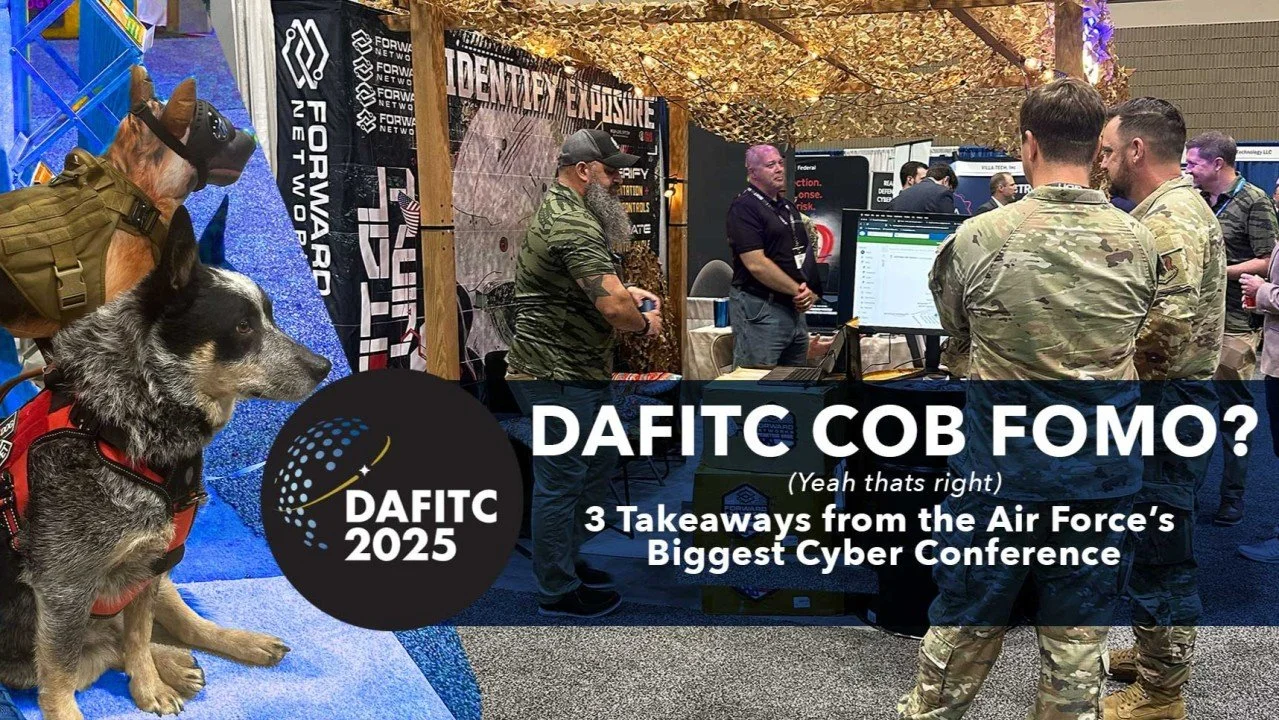
“The Air Force doesn’t call them ‘Forward Operating Bases‘, Charlie. They call them, uh, ‘Contingency Bases’ or ‘Contingency Operating Bases,” a colleague told me, halfway through setting up our Forward [Networks] Operating Base in Montgomery Convention Center.
“Oh maaannn. COBs?” I mewled. “We’re not Contingency Networks. We’re Forward Networks. Do you think anyone will be upset about it?”
“No. No, course not, we’ve got espresso and an inflatable tactical dog. They won’t notice.”
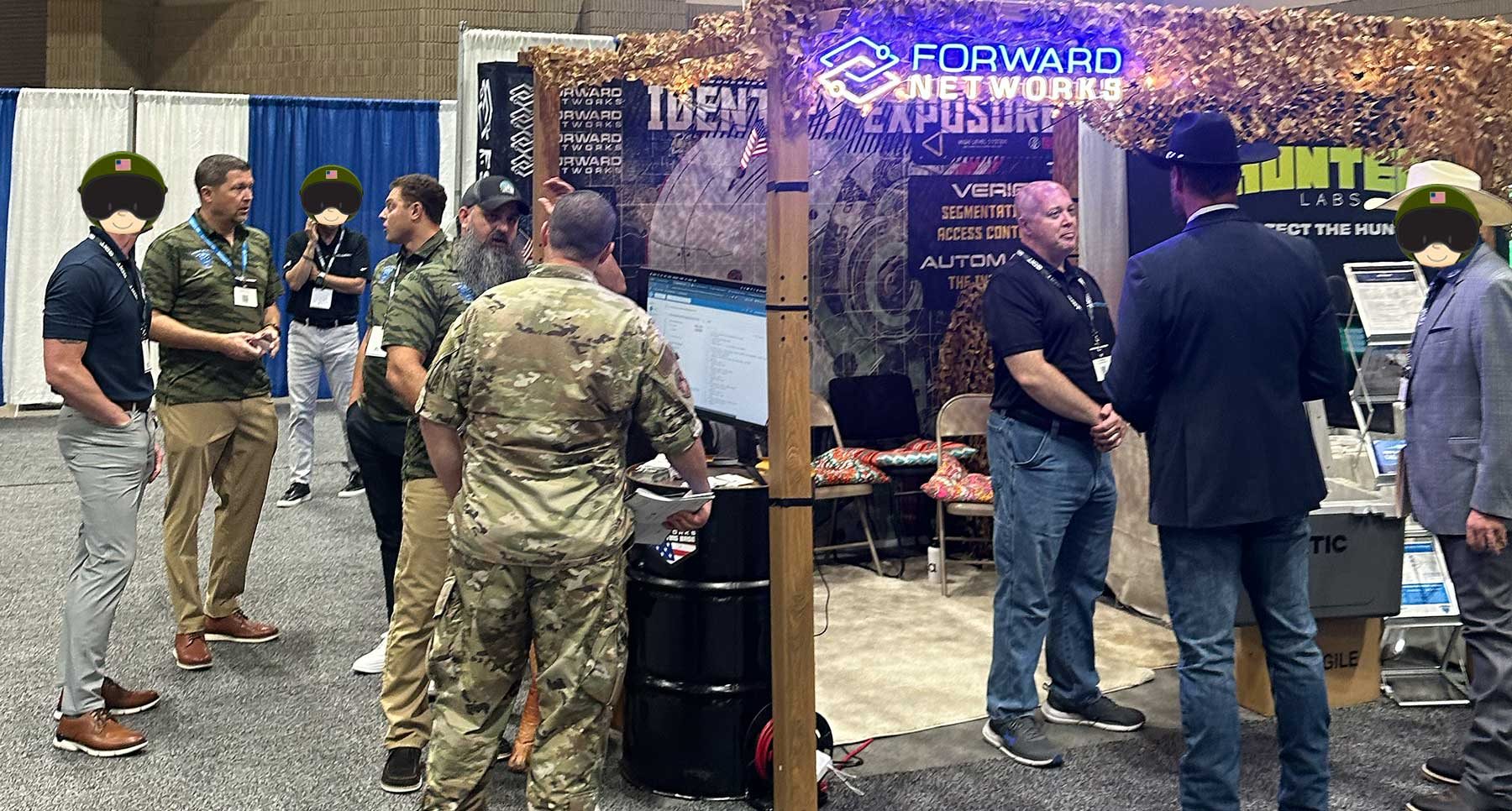
Not many vendors offer a full software demonstration on a 55-gal barrel.
He was right. We received hundreds (!!) of visitors to our “base” which had just spent a week in Georgia for the TechNet Augusta event, designed to resemble an Army Forward Operating Base. Those DAFITC attendees were concerned with 1) that aforementioned blow-up german shepherd 2) cans of Celsius and Starbucks espresso 3) the rundown on network digital twin software— two gimmicks and one game-changer of a platform for mission-critical network operators.
But let’s pan back out and talk about the trends I noted at the show overall, then I’ll circle back to me and my FOB-turned-COB.
Here are my the top 3 trends takeaways from DAFITC 2025:
Takeaway #1: You Can’t Have Cybersecurity “Readiness and Efficiency” Without Visibility
Every conversation I heard last week consistently came back to tomorrow’s conflicts will be won or lost in cyberspace. No pressure, right?
USAF cybersecurity operators are challenged to stay compliant with Binding Operating Directives (BODs) - those mandatory federal cybersecurity requirements that come down from CISA and can’t be ignored. These directives often have tight deadlines and require organizations to implement specific security measures or mitigate vulnerabilities across their entire network infrastructure. The real kicker is that you can’t secure or comply with what you can’t see, which is where network visibility becomes absolutely critical. Without comprehensive visibility into network traffic, assets, and activities, cybersecurity teams are essentially flying blind when trying to meet BOD requirements like asset inventory mandates, vulnerability management timelines, or incident detection capabilities. They need that deep network insight to prove compliance, identify gaps, and actually implement the security controls that BODs demand - because when federal auditors come knocking or when the next BOD drops with another impossible deadline, having complete visibility is often the difference between meeting requirements and scrambling to explain why you’re not in compliance. This is exactly where a network digital twin like Forward Enterprise can help.
Takeaway #2: The Hybrid Cloud Reality Check Hit Hard
If there was a drinking game for “hybrid cloud” mentions, we’d all have been carried out by lunch on Day 1. But behind the buzzword bingo was a real challenge: the Air Force is wrestling with massively complex, multi-cloud, multi-vendor environments that would make even seasoned network engineers break out in a cold sweat.
The conversations weren’t theoretical – they were practical problems about maintaining security posture across multi-GovCloud environments, on-premises infrastructure management, and tactical edge deployments that might be running off a generator in a tent somewhere.
This complexity nightmare is where having a network digital twin becomes your sanity-saving superpower. When your network spans from the Pentagon to a forward operating base to three different cloud providers, traditional network management tools throw up their hands and surrender. A digital twin that can model and visualize these hybrid architectures in real-time? That’s not nice-to-have anymore – that’s operational necessity.”
Takeaway #3: The Skills Gap Is Real, and Automation Isn’t Optional
Ok, hear me out, this isn’t a dig— USAF has more network complexity than it has people who can manage it effectively. That’s not unique though; it’s true of all complex global networks. It’s a modern dilemma, the need to accomplish more with fewer people. But this isn’t just about headcount – it’s about the cognitive load of managing increasingly complex systems. When your network engineers are spending 80% of their time just figuring out what the network looks like today, they’re not spending time on the strategic thinking that wins conflicts.
This is where network digital twins become true force multipliers. Instead of your best people reverse-engineering network diagrams from CLI outputs and tribal knowledge, they’re working from a live, accurate model of the entire network. Network automation can be a big lift for a small team, and it doesn’t happen overnight, but a mathematically-accurate model of your entire network is the crucial safety net that you won’t find in an ordinary network map.
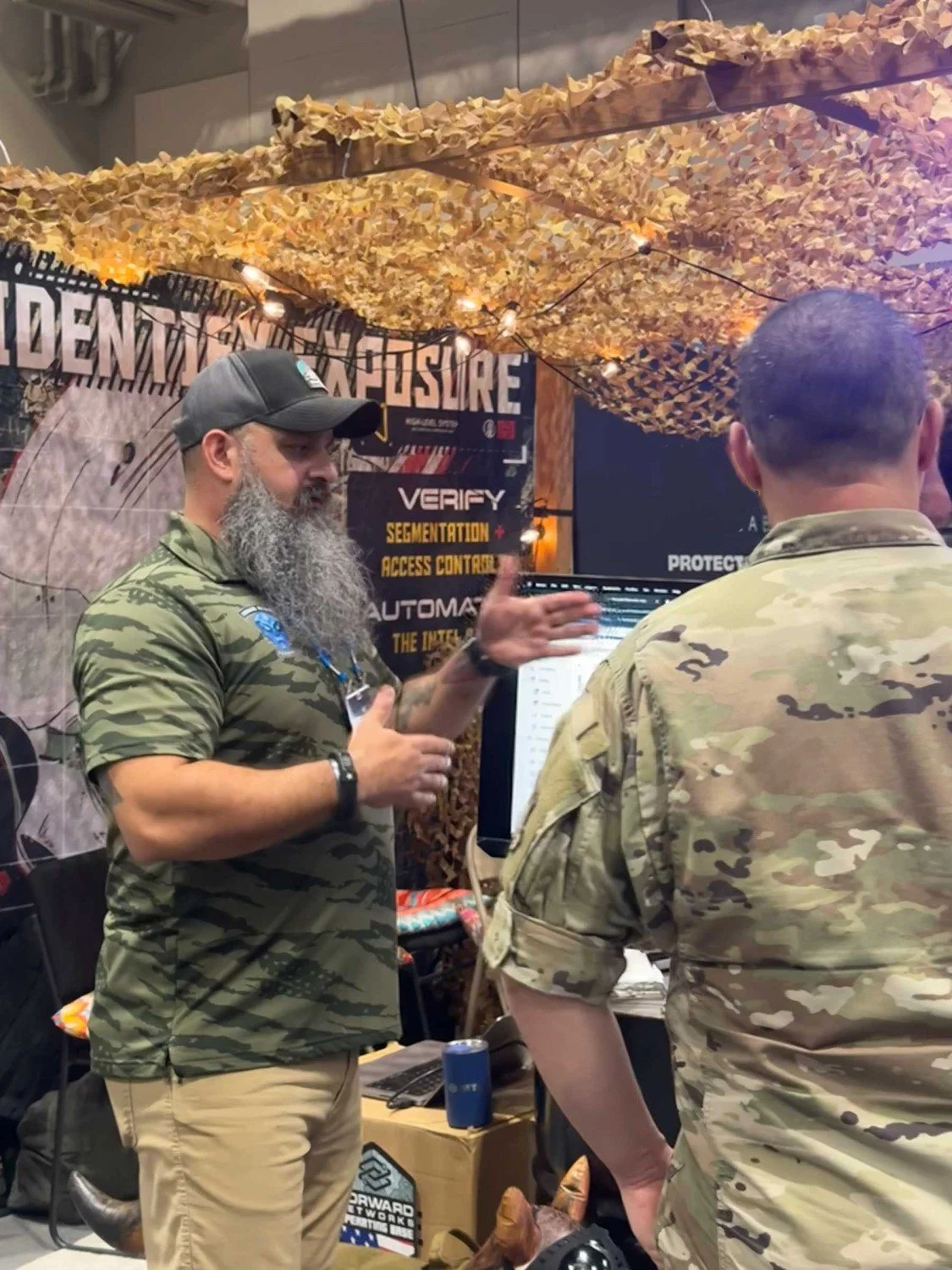
Integrations? Yes. Automation? Also Yes.
Our FOB/COB? Booth: Where Digital Twin Technology Met Mission Reality
Alert: Incoming humble-brag: While I did receive plenty of praise for capturing the haphazard vibe of an expeditionary operation (i.e. what tired 19 yr olds would hastily build in the desert), witnessing past/present DoD technologists light up during a live demonstration was far more satisfying. That’s why we trucked in camo netting, crates, and burn barrels– to show how Forward Networks understands the USAF cyber challenges and that Forward Enterprise is here to help. What resonated wasn’t expensive swag or slick marketing slides. Instead it was the moment when they realized they could finally see and query their entire network instead of struggling with outdated diagrams and tribal knowledge.
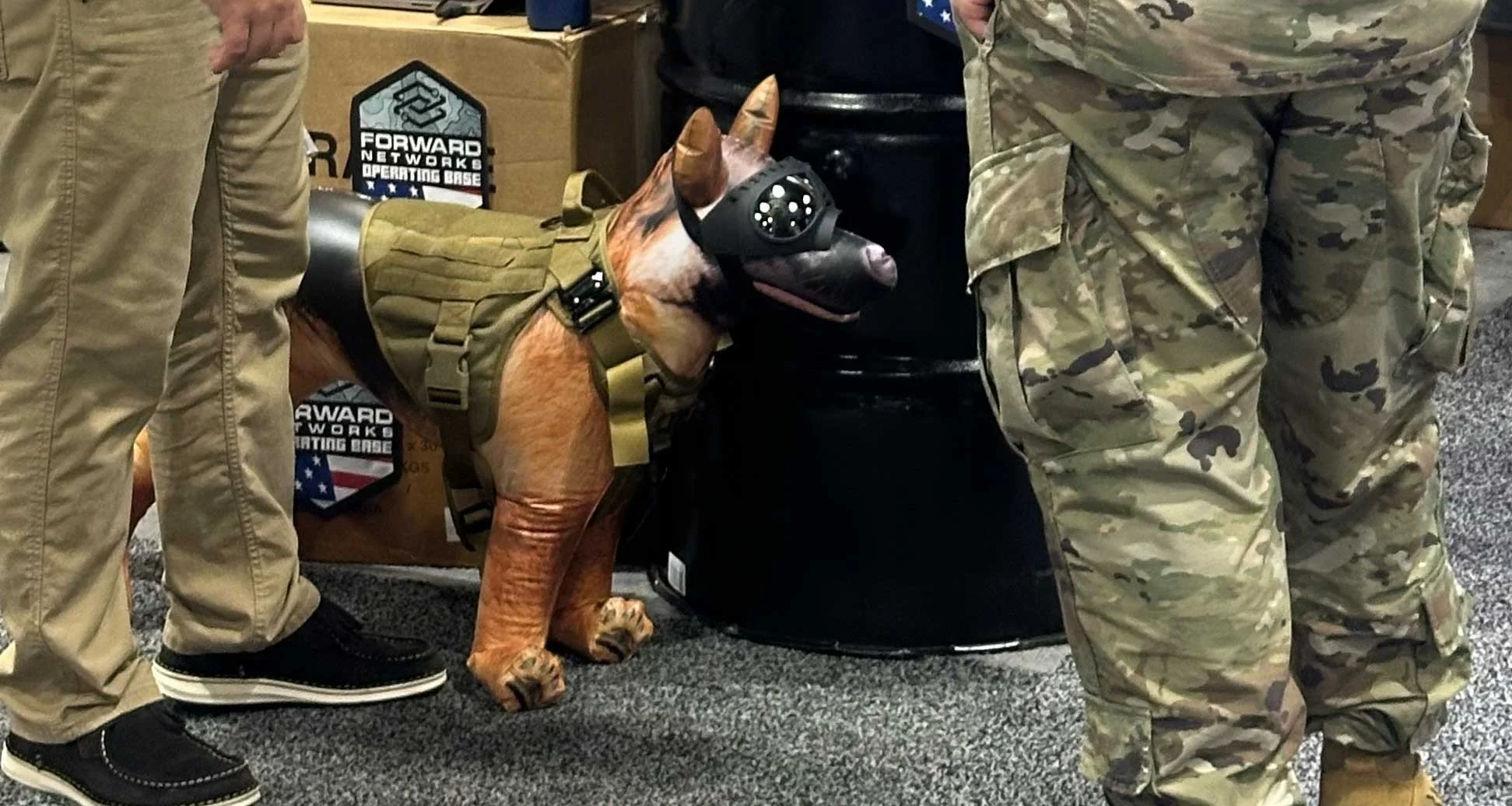
He couldn't give demos, still a good boi.
The Bottom Line
DAFITC 2025 made one thing crystal clear: the future of Air Force network operations isn’t about collecting more individual technologies. It’s about having the network visibility, actionable understanding, and operational agility to consolidate tools and do more with less.
Now, if you’ll excuse me, I need to recover from two weeks of road-warrior’ing TechNet Augusta and DAFITC and get prepped for the Billington CyberSecurity Summit next week. If you’re in the D.C. area, stop by and check out my next creative concept. ✨
#DAFITC #DAFITC2025 #BOD #CISA #NetworkDigitalTwin #CreativeMarketing #USAF #Cybersecurity #ForwardNetworks Sean Deveci Chris Naish Jason Pope Brad Wood